
Best Fence Options for Dog Owners in Sacramento
If you have a dog, choosing the right fence is one of the most important decisions you will make for your property. I have been building fences in Sacramento, Placer, and El Dorado County since 2004, and I can tell you that a fence that looks great is not always a fence that works for a dog. The two things are not the same. I have seen beautiful wood fences with gaps wide enough for a beagle to squeeze through, and I have seen tall iron fences that a determined shepherd managed to climb right over. Getting it right means thinking about your dog first and the aesthetics second.
This guide covers everything I walk homeowners through when they call me about fencing for a dog: height, materials, dig prevention, gate security, and the specific conditions here in the Sacramento area that can affect how a fence performs over time. If you are still in the early research phase, our Fence Buyer’s Guide is also worth a read before you start getting estimates.
What Makes a Fence Dog-Friendly?
The honest answer is that it depends on your dog. Before I ever talk materials or height with a homeowner, I ask a few questions: How big is the dog? Is it a digger, a jumper, or a fence-runner? Does it try to squeeze through gaps or push through soft spots? Does it bark and lunge at things on the other side?
Dogs have different escape strategies, and a fence that contains one dog can completely fail with another. Small dogs can slip under a gap that would stop a large dog cold. High-energy breeds like huskies and labs will test the height of a fence in ways that a basset hound never would. Some dogs dig; some dogs climb. Understanding your dog’s behavior is the first step toward choosing the right containment solution, and it is something I always want to talk through before recommending a specific fence type or height.
How Tall Should a Fence Be?
Height is the most common thing people underestimate. Here is a general starting point I use when talking with homeowners:
- Small dogs (under 20 lbs): A 4-foot fence is usually enough, but gap and ground clearance matter more than height at this size.
- Medium-sized dogs: 5 to 6 feet is the standard recommendation. A 4-foot fence is often not enough for a motivated medium dog.
- Large breeds: 6 feet is the baseline. I would not go shorter for any large, active dog.
- High-energy or athletic breeds: Some dogs, like huskies, border collies, and certain shepherd mixes, have cleared 6-foot fences. For these dogs, I sometimes recommend a 6-foot fence with coyote rollers or an inward lean at the top, which prevents them from getting purchase to climb over.
If your property is near a busy street, an open field, or a greenbelt, I always recommend going taller rather than shorter. The stakes are too high to guess low. In areas of Rocklin, Folsom, El Dorado Hills, and Granite Bay where properties back up to open space or wildlife corridors, I see this come up regularly, and the answer is almost always to add height and invest in solid containment from the start.
Preventing Escapes: Digging, Climbing, and Gap Issues
Dig Guards and Underground Protection
Digging is one of the most common escape methods, especially in Sacramento’s hot summers when dogs are restless and the soil dries out into loose, crumbly ground that is easy to excavate. There are several solutions I use depending on the property and the homeowner’s budget:
- Gravel barriers: A trench filled with compacted gravel along the fence line makes digging harder and discourages most dogs.
- Buried fencing: Extending the fence material 6 to 12 inches underground, bent outward in an L-shape, stops dogs that dig straight down at the base.
- Concrete mow strips: A poured concrete strip along the base of the fence is the most durable long-term solution. It also gives the fence a clean, finished edge that looks good from both sides of the yard.
For persistent diggers, I usually recommend pairing a concrete mow strip with a kickboard on the fence itself, which is a horizontal board installed at ground level. It is a standard upgrade on our wood fencing installations and adds both function and a clean finished look.
Gap and Picket Spacing
Gaps are sneaky. A gap that looks small to you can be perfectly sized for a small dog to push through, especially if the dog has done it before and knows it works. The areas to pay attention to are:
- Under the fence: Ground clearance should be no more than 2 inches for small dogs. On uneven terrain, this requires extra attention to post placement and bottom rail height.
- Between pickets: Standard picket spacing on a wood fence is fine for most medium and large dogs, but small breeds need tighter spacing or a solid panel design.
- Around gates: This is where I see the most overlooked gaps. A gate that is slightly out of square, or that has settled over time, can develop a gap at the corner large enough for a dog to squeeze through. I cover this more in the gate section below.
Comparing the Best Fence Types for Dog Owners
We offer several fencing options that work well for dogs, and each has its strengths. Here is how I walk homeowners through the comparison:
Wood Fencing
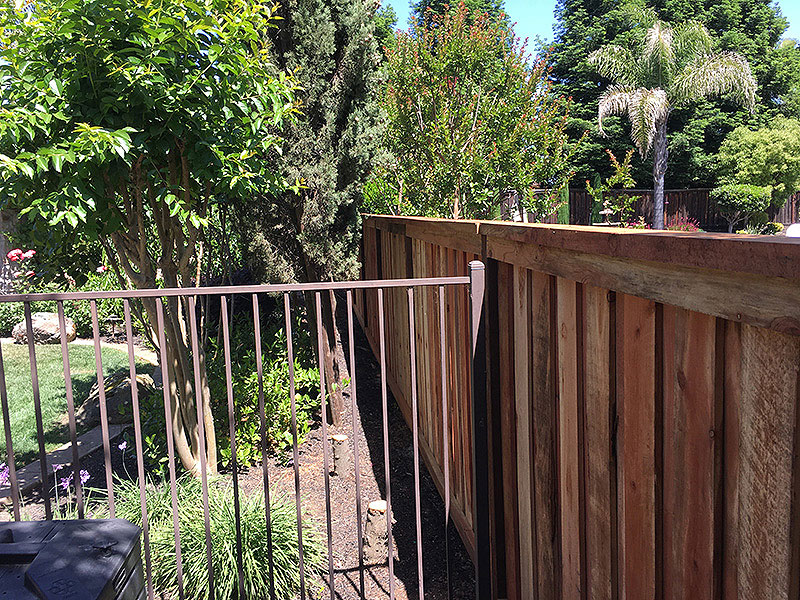
Wood is the most popular choice for dog owners in Sacramento, and for good reason. A solid wood fence built with tight picket spacing provides excellent containment, full privacy so the dog cannot see things that might trigger fence-running or lunging, and a natural look that fits most neighborhood aesthetics. We build primarily with redwood, which holds up well in our dry Sacramento summers and resists the kind of warping and rot that can create gaps over time.
The considerations for wood are maintenance and longevity. A redwood fence installed correctly will last many years, but it does require periodic sealing or staining to stay in top shape. Ground contact is also a factor; posts and kickboards at ground level take on more moisture and wear than the upper sections of the fence.
Chain Link Fencing
Chain link is the most cost-effective option and works well for large dogs in situations where privacy is not the primary concern. It is durable, low-maintenance, and provides good visibility so you can see your dog from inside the house.
The main concern with chain link for dogs is that the diamond mesh pattern can act as a climbing wall for athletic breeds. Some dogs figure out very quickly how to get their paws into the links and scale the fence. If you have a climber, chain link may not be the right choice regardless of height. For most average-energy dogs, though, a 5- or 6-foot chain link fence with a tight bottom rail is a reliable and budget-friendly solution.
Iron Fencing
Decorative iron fencing is a strong, durable option that looks sharp and holds up for decades with minimal maintenance. It is a popular choice in Granite Bay, El Dorado Hills, Folsom, and other areas where curb appeal and property value are priorities.
The key thing to pay attention to with iron for dogs is the picket spacing. Standard iron picket spacing is designed for appearance, not dog containment, and the gaps can be too wide for small and medium breeds. I always ask about the dog’s size before recommending iron for a backyard containment fence. When the spacing is right, iron is one of the most secure options available. It also does not provide the climbing surface that chain link does, which is a real advantage for athletic breeds.
Quick Comparison
| Fence Type | Security | Privacy | Maintenance | Cost |
|---|---|---|---|---|
| Wood (Redwood) | High | Full | Moderate | Mid-range |
| Chain Link | Moderate | None | Low | Budget-friendly |
| Iron | High (with correct spacing) | None | Low | Higher upfront |
Gate Safety: The Most Overlooked Part of Dog Containment
I tell every homeowner with a dog the same thing: your fence is only as secure as your gate. I have seen carefully built, well-maintained fences defeated by a gate that swings open on its own, latches that a clever dog figured out how to nudge open, or corners with gaps that developed as the gate settled over time.
For dog owners, I always recommend:
- Self-closing hinges: The gate closes automatically every time. You never have to rely on someone remembering to close it behind them, which is especially important if you have kids or frequent visitors.
- A secure latch: A simple spring latch is not enough for dogs that have learned to nose or paw at the gate. A gravity latch or a latch that requires a deliberate two-step motion to open is a much safer choice.
- Tight clearance at the corners: We build our gates to minimize the gap between the gate and the post. On uneven ground, this sometimes requires extra attention to post placement and gate geometry.
- Regular inspections: Gates shift over time, especially in Sacramento’s clay soils where seasonal expansion and contraction can move posts slightly. I recommend checking gate alignment once or twice a year and adjusting the hardware as needed.
We also install iron gates for clients who want a more secure entry point at the front of the property, with options including self-closing pool gates that meet safety code requirements.
Sacramento-Specific Conditions Dog Owners Should Know About
A few local factors come up again and again when I am talking with Sacramento homeowners about dog fencing:
- Dry summer soil: Sacramento’s long, dry summers cause soil to shrink and shift, which can create or widen gaps under a fence over time. A fence that was tight in March can have ground clearance issues by August. Concrete mow strips are the best long-term solution for this.
- Properties near open space: Homes in areas like Antelope, Citrus Heights, Roseville, Lincoln, and Cameron Park that back up to greenbelts or open fields face different pressure from dogs that want to follow scents into the open. In these situations, I strongly recommend going taller and addressing the bottom of the fence more carefully than you might in a standard neighborhood lot.
- HOA restrictions: Many communities in Granite Bay, El Dorado Hills, and Folsom have HOA guidelines on fence height and materials. It is worth confirming what is allowed before committing to a plan. Our FAQ page covers some common questions about permits and restrictions, and I am always happy to help homeowners think through what will work within their HOA guidelines.
Common Fence Mistakes Dog Owners Make
In over 20 years of building fences, I have seen the same mistakes come up repeatedly. Here are the ones I most want homeowners to avoid:
- Choosing a fence that is too short. It is tempting to save money by going with a 4-foot fence for a medium-sized dog. That decision often costs more in the long run when the fence has to be replaced or extended.
- Ignoring the bottom of the fence. The top gets all the attention, but the bottom is where most escapes happen. Address it from the start.
- Overlooking gate security. A $5,000 fence is defeated by a $20 latch that fails. Invest in quality gate hardware.
- Choosing based only on appearance. Every fence type we offer looks great when it is built well. The right choice is the one that works for your dog, not just the one that photographs well.
- Not accounting for your dog’s future size. If you have a puppy, build for the dog it is going to be, not the dog it is right now.
Best Fence Recommendations by Situation
Here is the quick version of what I typically recommend for specific situations:
- Best for privacy and containment: Wood fencing with tight picket spacing and a kickboard at the base.
- Best budget option: Chain link fencing at 5 to 6 feet for medium to large dogs that are not climbers.
- Best for durability and curb appeal: Iron fencing with proper picket spacing for the dog’s size.
- Best for dogs that dig: Any fence type with a concrete mow strip or buried L-footer along the base.
- Best for dogs that jump: 6-foot solid wood fence, or iron with coyote rollers at the top for extreme jumpers.
- Best all-around choice for most households: A 6-foot redwood wood fence with a kickboard, a self-closing gate, and a gravity latch covers the most situations well.
Ready to Talk Through Your Options?
Every property is different, and every dog is different. The recommendations in this guide are a solid starting point, but the best fence for your yard and your dog is one that comes from actually walking the property, understanding how your dog behaves, and matching the solution to both.
At A Better Fence Company, I meet personally with every client at the start of every project. We have been serving homeowners throughout Sacramento, Placer, and El Dorado Counties since 2004, and we take the time to get the details right before we ever set a post.
If you are ready to talk through what would work best for your property and your dog, give us a call or reach out through our contacts page to schedule a free estimate. We would be glad to help you get it right the first time.
Scott Gregory, A Better Fence Company Inc
(916) 417-5585
>