
Redwood Fence Styles Popular in Sacramento Homes
One of the first things I hear from homeowners when they call me is some version of: “I know what I want it to look like. I just don’t know what it’s called.” That’s completely normal. Most people aren’t thinking in fencing terminology when they scroll through photos of their neighbor’s yard or browse ideas online. They just know they want something that looks right, holds up, and actually gives them the privacy they’re after.
I’ve been building fences in the Sacramento area since 2004, serving Sacramento, Placer, and El Dorado Counties, and redwood is still the material I use most often for residential work. It weathers well in our climate, it’s naturally resistant to insects and decay, and it looks good for a long time when it’s built correctly. But the style you choose matters just as much as the material, and there are more options than most people realize.
Here’s a rundown of the redwood fence styles I install most often, and what makes each one a good fit for different properties and priorities.
Dog-Ear Fencing
This is the most common wood fence style you’ll see across Sacramento neighborhoods, including Elk Grove, Citrus Heights, Rancho Cordova, and just about everywhere else. Dog-ear fencing gets its name from the notched corners at the top of each picket, which gives the fence a clean, softened profile instead of a sharp point.
It’s a straightforward, cost-effective option that delivers solid privacy and a tidy appearance without a lot of fuss. If you want a dependable fence that fits the neighborhood and doesn’t require a lot of decision-making, dog-ear is usually where I start the conversation.
The simplicity is part of what makes it durable, too. There’s less surface area for weather to work against, and the uniform picket spacing makes it easy to build consistently.
Board-on-Board Fencing
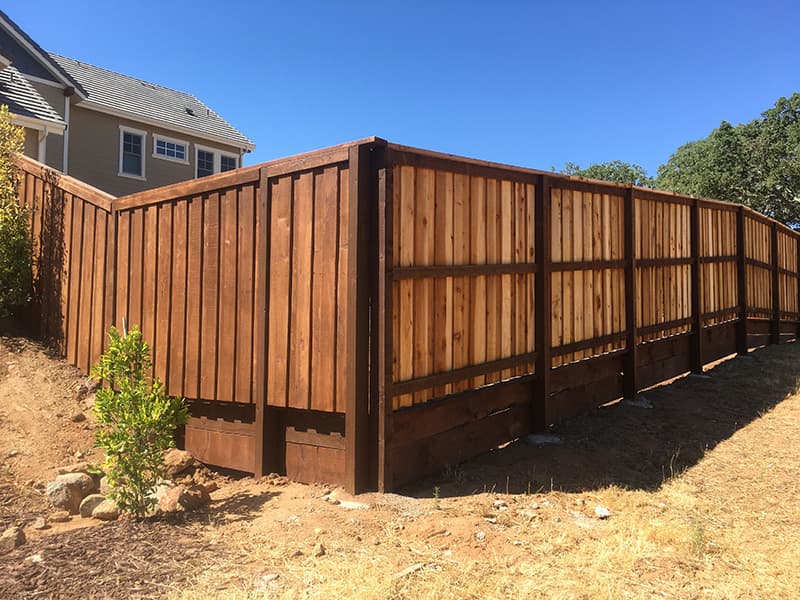
Board-on-board is my most-requested privacy fence style, and for good reason. Instead of pickets placed side by side, the boards alternate, one on the front of the rail and one on the back, overlapping slightly down the entire run of the fence. The result is zero gaps, even as the wood naturally expands and contracts through Sacramento’s dry summers and wet winters.
It also has a nice visual quality to it. The alternating depth gives the fence a little texture and dimension that a flat dog-ear fence doesn’t have. From the street, it looks substantial. From your yard, you actually get the privacy you paid for.
I build a lot of board-on-board fences in El Dorado Hills, Folsom, and the Roseville/Rocklin corridor, where homeowners tend to have more invested in their properties and want a fence that reflects that. It’s a solid upgrade over standard dog-ear without being significantly more expensive.
Horizontal Modern Fencing
This style has gotten a lot more popular over the last several years, particularly in newer construction neighborhoods and among homeowners doing full landscape renovations. Instead of vertical pickets, the boards run horizontally, usually in a clean, evenly spaced pattern that gives the fence a contemporary, architectural look.
Horizontal fencing pairs well with modern home designs, clean-lined landscaping, and low-water yards. In areas like El Dorado Hills, Cameron Park, and newer parts of Lincoln and Auburn, where the homes themselves have a more current aesthetic, horizontal redwood fencing tends to integrate really naturally into the overall look of the property.
One thing worth knowing: horizontal fencing requires more careful attention to structural support, since the boards span between posts differently than vertical pickets do. The post placement and rail system matter more here. Built right, though, it holds up just as well as any other style and adds real curb appeal.
Cap and Trim Fencing
Cap and trim takes a standard fence and finishes it at a higher level. A horizontal cap board runs along the top of the fence, and trim boards frame the rails, giving the whole structure a more finished, polished appearance. Think of it as the difference between a painted room with plain drywall edges versus one with clean baseboard and crown molding. Same room, very different impression.
I install cap and trim fences for homeowners who want their fence to feel intentional rather than purely functional. It works especially well on larger properties, along front yard entries, or anywhere the fence is going to be highly visible. The added trim also provides some practical benefit; it protects the top of the fence from direct weather exposure, which can help extend the life of the pickets over time.
If you’re comparing options and want something that looks distinctly custom without going into an entirely different price category, cap and trim is often the right middle ground.
Good Neighbor Fencing
This one comes up often in conversations about shared fence lines, which is the majority of residential fence projects. A good neighbor fence, sometimes called a “shadow box” fence, is built so that both sides of the fence look finished. The pickets alternate front and back along the rails, the same as board-on-board, but with gaps between them rather than overlapping. From either side of the property line, the fence looks the same.
It’s a particularly practical choice when you’re splitting the cost with a neighbor, or when the fence borders a shared space and both sides of the fence will be visible regularly. A lot of the fence projects I do in Sacramento, Loomis, and Granite Bay involve some version of this conversation: who pays for what, and what does each side look like. Good neighbor fencing solves that second question cleanly.
The style also allows for some airflow and light through the gaps, which can be a benefit in tight yards or along garden beds where you don’t want a completely solid wall.
Choosing the Right Style for Your Property
The right fence style comes down to a few things: your privacy goals, your property layout, the aesthetic of your home, and your budget. Those four factors together usually point pretty clearly in a direction. If you’re not sure where to start, our Fence Buyer’s Guide walks through the key decisions in plain terms, and our FAQ covers the questions I hear most often.
For a closer look at the redwood options we build, visit our Wood Fencing page, which includes photos from completed installations across the region.
I’ve been doing this long enough to know that a good fence starts with a good conversation. If you’re in Sacramento, Placer, or El Dorado County and you’re ready to figure out what makes sense for your property, I’m happy to come take a look. Request a free estimate online, or text or call me directly at (916) 417-5585.
Scott Gregory, A Better Fence Company Inc